Floating Ecological Infrastructure
Turn water surfaces into working environmental assets.
Floating Ecological Infrastructure (FEI) is a modular raft system that transforms water surfaces into active environmental, productive and utility infrastructure.
Depending on site conditions and objectives, FEI can be configured for nature-based water treatment, ecological rehabilitation, productive cultivation, nursery plant production, valuable biomass, floating solar, water-quality monitoring and other site-specific functions.
The modular structures are manufactured using up to 70% recycled polypropylene, combining practical environmental infrastructure with circular-economy principles.
One Platform. Multiple Applications.
FEI is not simply a single treatment product or a conventional floating wetland.
It builds on established approaches such as floating wetlands, floating gardens and floating phytoremediation platforms, and extends them into a configurable infrastructure platform that can be adapted to the water body, the operational requirement and the intended outcome.
Water-Quality and Ecological Treatment
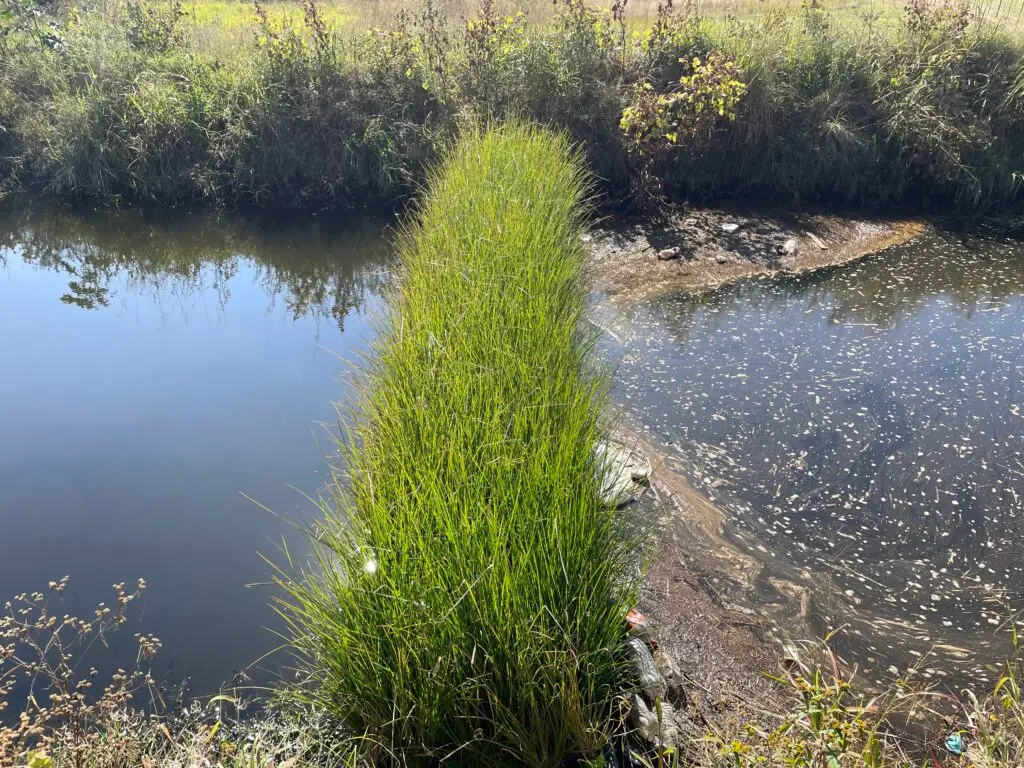
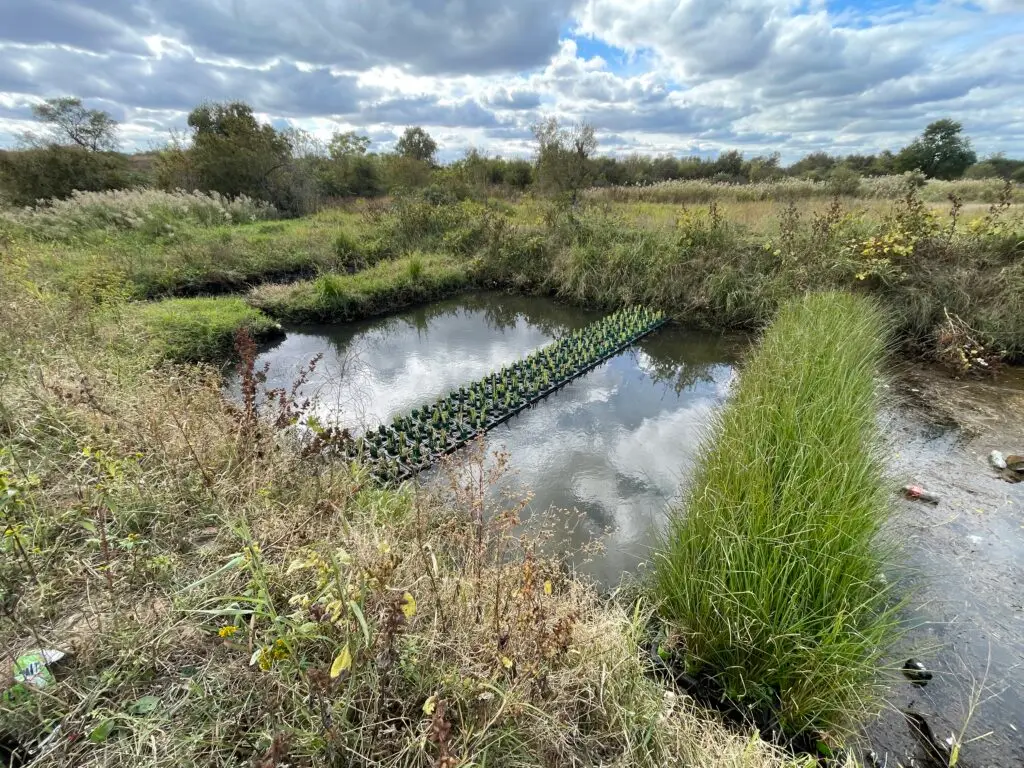
Planted FEI modules can support nutrient uptake, root-associated microbial treatment, suspended-material interception and biomass harvesting. The Vetiver Treatment Platform is one specialised configuration developed for water bodies requiring robust, harvestable vegetation and extensive submerged root-zone surface area.
Productive Floating Cultivation
Where water quality, crop-safety requirements and intended end use allow, FEI can support crops, nursery plants, propagation material and other valuable biomass, converting available water, space and nutrients into productive biological outputs.
Floating Solar Infrastructure
Tailor-made FEI configurations can support floating solar panels and associated equipment, as a dedicated installation or incorporated into a broader water-surface system alongside environmental, monitoring or operational components.
Hybrid and Site-Specific Systems
FEI systems can combine several complementary functions in one installation: treatment planting, productive cultivation, solar generation, aeration, monitoring instruments, litter interception, habitat structures and operational access modules.
A Modular Infrastructure System
FEI installations are assembled from modular floating components that can be configured around the physical and operational conditions of each site.
The system can be adapted according to:
- The size and shape of the available water surface
- Water depth and water-level variation
- Wind, wave and flow conditions
- Anchoring and access requirements
- The intended plants, equipment or productive use
- Harvesting and maintenance requirements
- Monitoring objectives
- Future expansion or reconfiguration
Additional modules can be incorporated as the installation develops, allowing the infrastructure to be scaled or adapted rather than requiring the entire system to be fixed at the outset.
Circular Materials, Circular Systems
FEI supports circular-economy principles at both the infrastructure and biological levels.
Recycled Material in the Platform
The modular raft structures are manufactured using up to 70% recycled polypropylene, creating a durable, productive application for recovered plastic material.
Recovering Value from Nutrients
In nutrient-affected water bodies, nitrogen, phosphorus and organic material are commonly treated only as pollutants. Planted FEI systems create an opportunity to incorporate some of these nutrients into harvestable plant material, so that, where suitable and appropriately managed, biomass becomes a productive output rather than returning its nutrients to the water.
Productive Use of Existing Water Surfaces
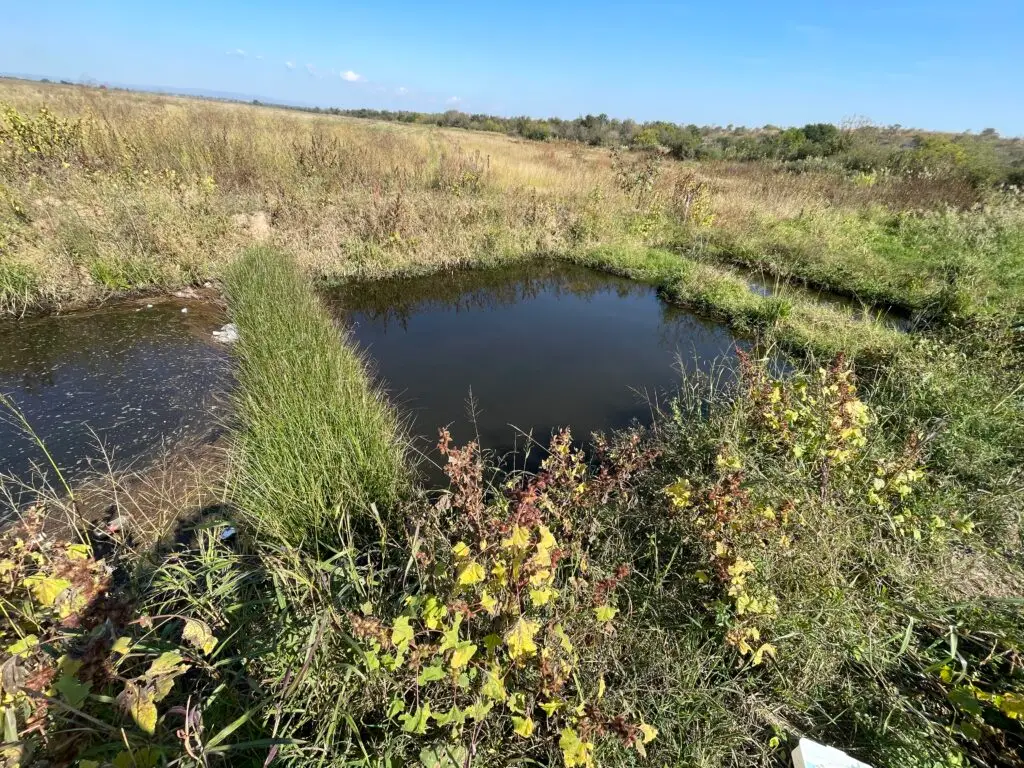
FEI uses the surface of existing dams, ponds, canals and impoundments without displacing productive land. Where site conditions allow, the same system can contribute to water management, plant production, renewable energy generation and environmental monitoring.
Water-Quality Treatment with FEI
Water-treatment applications use plants and their submerged root systems to create an active biological treatment zone within the water body.
Nutrient Uptake
Vetiver and other suitable plant species can take up nitrogen, phosphorus and other constituents from the water. Regular harvesting removes plant-bound nutrients from the system and reduces their return through natural dieback and decomposition.
Root-Associated Biofilm
Hydroponic roots create extensive submerged surface area for bacteria, fungi, algae, diatoms and other organisms. These root-associated communities can contribute substantially to nutrient transformation, organic-matter breakdown and broader ecological processing.
Suspended-Material and Litter Interception
Modules can be positioned at inflows, canal ends and other strategic locations to intercept floating litter and some suspended material before it disperses through the larger water body, concentrating maintenance and removal in accessible locations.
Ecological Function and Adaptive Management
Planted modules can provide structure, shelter and habitat complexity in otherwise open water bodies, with ecological value depending on plant selection, water quality, design and site management. Platform area, plant choice, placement, harvesting frequency and supporting technologies are adjusted to monitoring data. Performance is measured and managed rather than assumed.
The Vetiver Treatment Platform
The Vetiver Treatment Platform is a flagship water-treatment application within the broader FEI system.
Vetiver grass produces dense, fibrous root systems that can extend into the water beneath the platform, creating substantial biological surface area while supporting a large quantity of harvestable above-water biomass. Typical settings include irrigation dams and canals, wastewater-polishing ponds, estate and residential dams, agricultural return-flow systems, and inflow interception zones.
Vetiver is not automatically appropriate for every water body. Plant choice and system design must reflect water chemistry, contaminant profile, intended water use, climate, hydrology and biomass-management requirements.

Productive Floating Cultivation
Not every water body requiring FEI is severely polluted.
Where water quality is suitable, or where an appropriately managed nutrient stream can be used safely, the platform can support productive plant growth: nursery plants, plant propagation, selected food crops, ornamental plants, and non-food fibre or craft biomass, among others.
Crop and biomass selection must be based on water quality, contaminant exposure, food-safety requirements, market requirements and the intended use of the harvested material. Productive cultivation is therefore designed as a site-specific system rather than assumed to be appropriate wherever FEI is installed.
Floating Solar
FEI can also be configured as a modular support system for floating solar panels.
The floating solar solution is tailored to the panel arrangement, water body, anchoring requirements, access needs and broader operational environment. Depending on the project, floating solar modules may form a dedicated installation or operate as part of a zoned system in which different areas of the water surface support energy generation, ecological treatment, monitoring or plant production.
Where FEI Can Be Applied
FEI may be considered across a wide range of water bodies and objectives:
- Irrigation dams and agricultural water systems
- Wastewater-treatment and polishing ponds
- Residential and estate dams
- Canals and inflow points
- Municipal impoundments
- Industrial and selected mining water bodies
- Aquaculture and integrated production systems
- Nursery and propagation facilities
- Ecological rehabilitation projects
- Floating renewable-energy installations
- Research, demonstration and monitoring sites
Suitability depends on the objective, water quality, hydrology, depth, water-level variation, wind exposure, access, anchoring conditions and the intended use of the water or harvested products.
How INDAGATUS Develops an FEI Solution
INDAGATUS follows an assess, design, implement, monitor and adapt process.
1. Understand the site. We establish what the water body currently does, what pressures or opportunities are present, and what outcomes the client requires.
2. Characterise the water and operating environment. Considerations may include water quality, nutrient loading, contaminants, hydrology, water depth, seasonal variation, access, wind and wave conditions, and existing infrastructure.
3. Select the appropriate FEI configuration. The recommended configuration may focus on treatment, ecological function, plant production, floating solar, monitoring, or a combination of these.
4. Design for operation and maintenance. The design addresses module layout, anchoring, access, harvesting, servicing, monitoring and integration with existing operations.
5. Implement with specialist partners. INDAGATUS coordinates implementation with appropriate manufacturing, engineering, construction, scientific and technology partners.
6. Monitor and adapt. Performance data is used to refine platform area, plant choice, positioning, harvesting schedules and supporting interventions.
Explore What Your Water Surface Could Support
A dam, pond, canal or impoundment does not have to remain a passive storage area or an unmanaged environmental liability. With the right assessment and configuration, its surface may support ecological treatment, plant production, renewable energy, monitoring infrastructure, or a combination of these.
The first discussion is not about how many platforms are required. It is about the water body, the site objective, and the conditions that will determine the right solution.